Tembo Bondokotwe Americanus

by

Mwizenge S, Tembo, Ph. D.

Emeritus Professor of Sociology

I may have discovered that an American garden common weed is an edible or a vegetable which Zambians and I, as a Zambian, can eat. Should Americans, including everybody, eat this weed as a regular vegetable? The initial observation happened on July 23, 2026 at about 19:30 hours or 7:30 pm Eastern American time in Bridgewater in Virginia in the United States of America. Three days ago, I went to my garden in my backyard to fetch bondokotwe leaves to cook for my family and I to eat. It is a very tender Zambian vegetable that grows both wildly  in the farm field in Zambia but one can also get commercial seeds from Zambia to grow it. I had planted bondokotwe for 3 straight years. It grows rather tall.
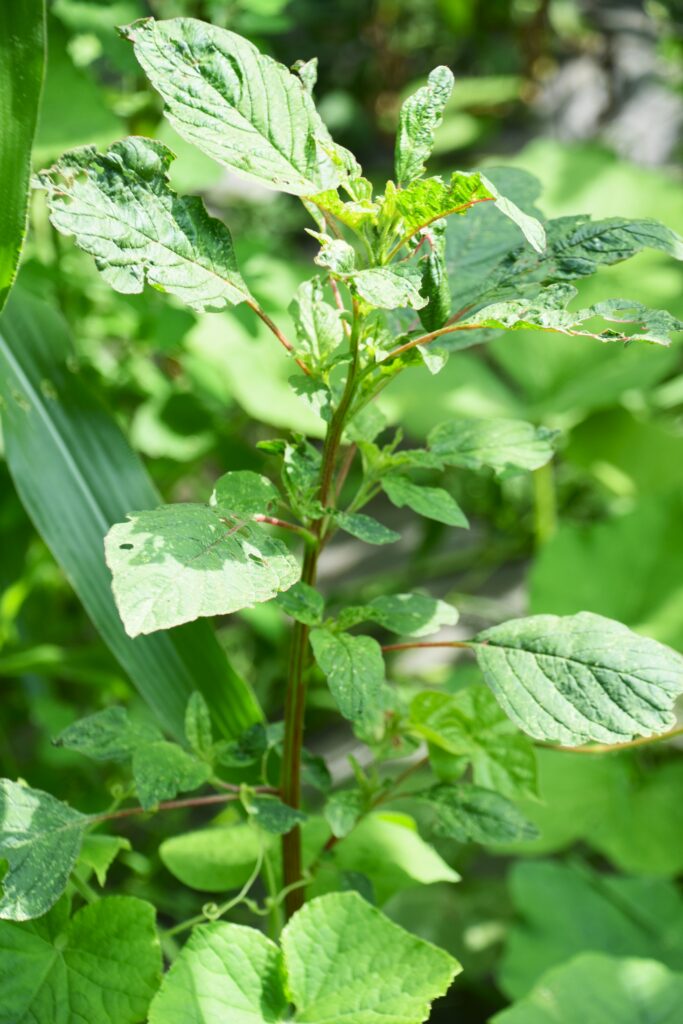
American common garden weed.

I was fetching and nipping off the leaves from the talk plants which were about 2 to 3 feet 0.60 to 0.91 meters tall. I noticed one of the tall reddish weeds growing wildly among the bondokotwe. I had to nip off the leaves carefully because I did not want to include the leaves from the wild weed. It just struck me that the 2 plants looked so similar I was getting confused. I didn’t think of it any further.

I took the bondokotwe leaves and cooked them in the usual Zambian away. I used some olive oil, diced onion and a few slices of tomato. I cooked the vegetables for 10 minutes. I had added some salt but tasting it I thought I had oversalted it. When my wife walked in from work I told her I might have oversalted her favorite tender Zambian vegetable. She later tasted it and said she didn’t think it was oversalted. It was alright.
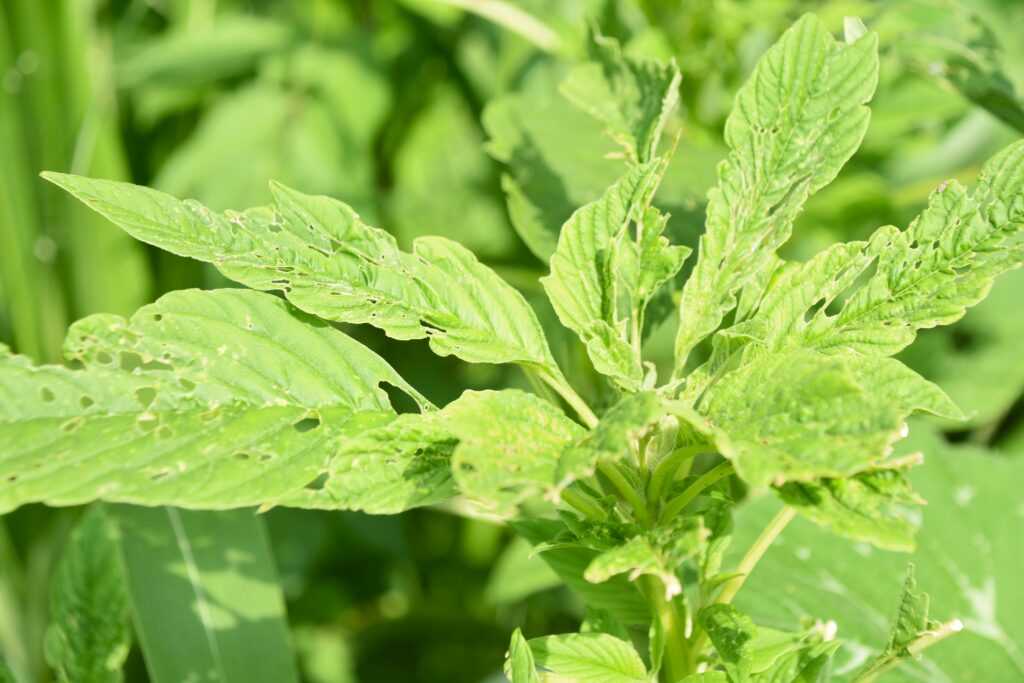
Zambian Bondokotwe or Bondo

The following evening at 19:30, because it was a cool day, I picked the few dry tree leaves and dry twigs that the lawn mowers had piled up under the two trees in our front yard. I went into the back yard and cut some of the shrubs along the fence. I had to pass by the garden toward the tool shade when the eureka moment happened. I looked at the bondokotwe plants I had nipped leaves from and the tall weed that was right in the middle. The leaves looked very similar, although the stems of the weed plants had a reddish tinge. The bondokotwe stems were green. “What if I ate the leaves of the weeds, would I die?”  Why? This is what I used to tell my anthropology students for 31 years. How can you tell if a wild plant or mushroom is not poisonous if you are lost in the woods or wilderness for days and cannot find any food to eat to survive? If ants and other creatures are eating it, then whatever it is might be safe for humans to eat. Bingo!!!
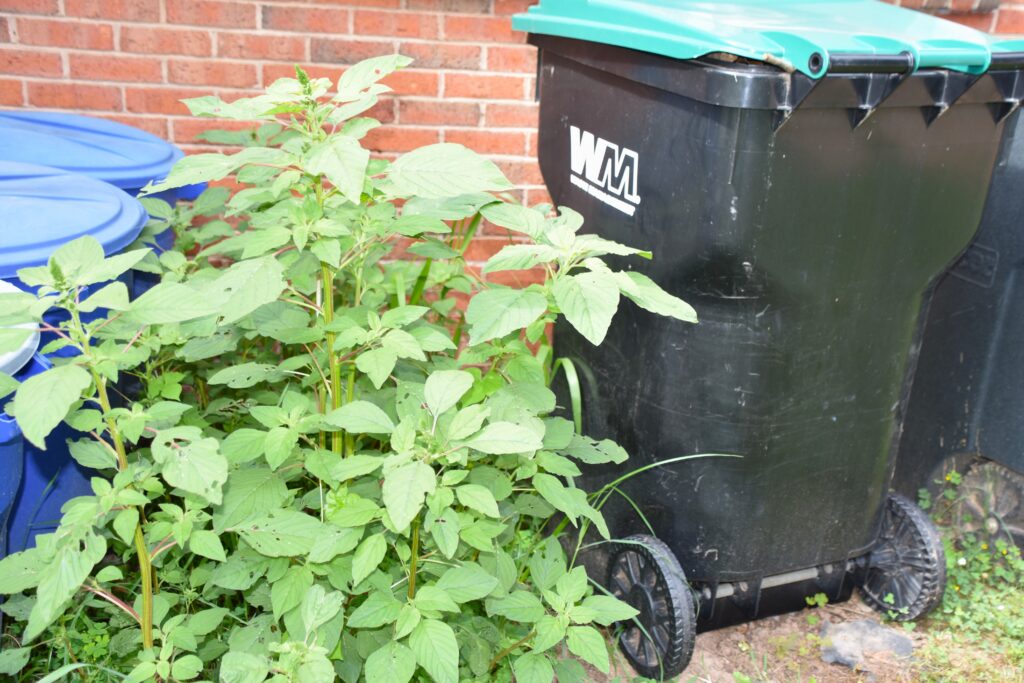
American common garden weed growing around the house.

The  bondokotwe leaves and wild American weeds had both been eaten by insects. I never ever spray my garden with any insecticides or pesticides since I began gardening on this patch in 1990 or 36 years ago. It was then that I  noticed that the American Bondo-looking weeds were also growing along the edge of the house too near the large trash or rubbish bins,  cans or containers. This was my big moment of discovery. Tomorrow I will cook  the leaves and eat them. Will I find that somebody in the US has already discovered this? Will someone claim that Aristotle (384-322B.C) the philosopher ate these same weeds as a vegetable in ancient Greece? This would ruin my discovery.

July 25, 2026.

At 18:00 hours or 23:30hours Zambian time, I walked into my backyard and started my memorable testing. I nipped the leaves from the American garden weeds that had grown to 2 to 3 feet or  0.60 or 0.91 meters tall. I took them to the kitchen. I cut them and diced a small tomato and onion. I poured a tablespoon of olive oil in the pot. I poured the vegetables into the pot and began to cook them at 18.50hours. Ten minutes later at 19:00hours, I put a tablespoon of the vegetable on a small plate and calmly ate it. It was tasty with a normal mild dark vegetable slight bitterness edge. I waited for 10 minutes to 19:10 hours to see if the vegetable was poisonous. I was alright. I did not faint or break into a horrible sweat with a churning stomach. This weed was a delicious vegetable.
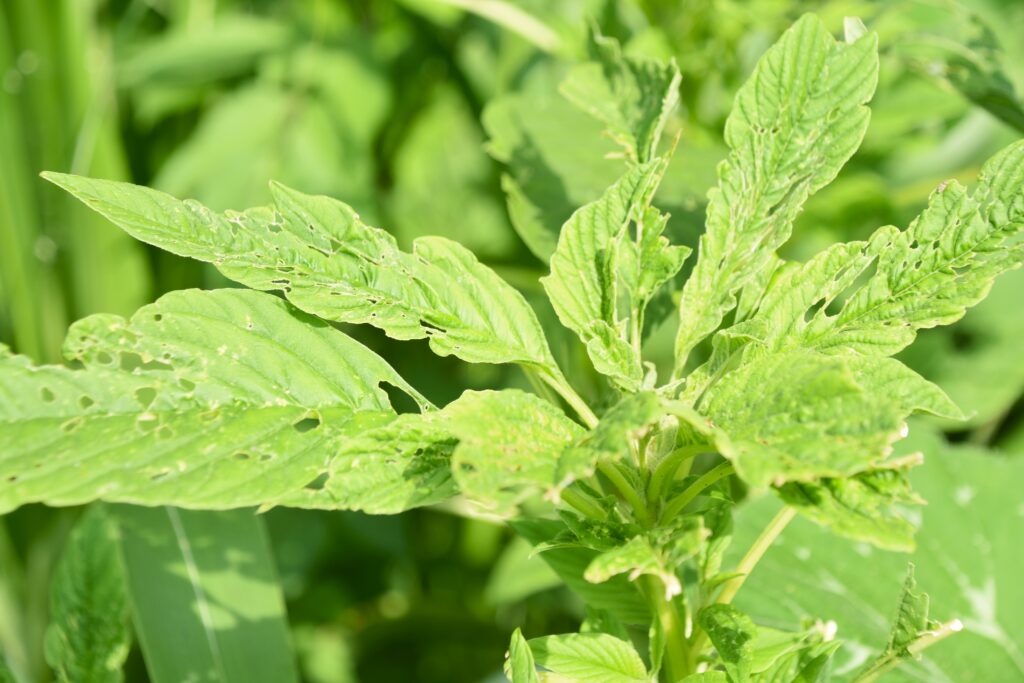
Zambian Bondokotwe or Bondo vegetable.

So, on July 25 during the year of our Lord in two thousand and twenty-six, I Mwizenge Tembo professor of Sociology from the town of Bridgewater discovered the American common garden weed to be an edible vegetable identical to Zambian bondokotwe vegetable. From now to the end of time, this American common vegetable weed shall be named or called to include Zambian name “Tembo Bondokotwe Americanus”. The short name will be “Tembo Bondo”. I shared the great exciting news with my first-born son who had just finished eating his dinner. I walked with him to the garden, showed him the American common garden weed that I had just cooked and eaten. My son who is a hotel cook was amused. I told him that tomorrow I would eat the new Tembo Bondo with the Zambian nshima meal.
The Suffering Soul and LoveByMwizenge S. Tembo, Ph. D.Emeritus Professor of Sociology Author of the Internationally Acclaimed Romance Adventure Novel: “The Bridge”

“The very attempts of modern societies to insulate themselves from suffering have resulted in a refusal of love, for the willingness to love and be loved makes suffering inevitable.” President Kenneth Kaunda, A Humanist in Africa, 1966, 1976, p. 40.
What is suffering? Suffering is the persistent emotional pain we feel when something negative happens to us. It feels to us as a mixture of anxiety, fear, anger, nervousness, anguish, grief, loneliness, and apprehension. The suffering can be low grade. When the suffering is very severe it becomes what my mother in the Tumbuka language tongue called kuzingiziwa. Kuzingiziwa is when the suffering is causing so much emotional pain that it feels like the person’s emotions are being wringed, twisted, and their physical skin is being stripped off their body.

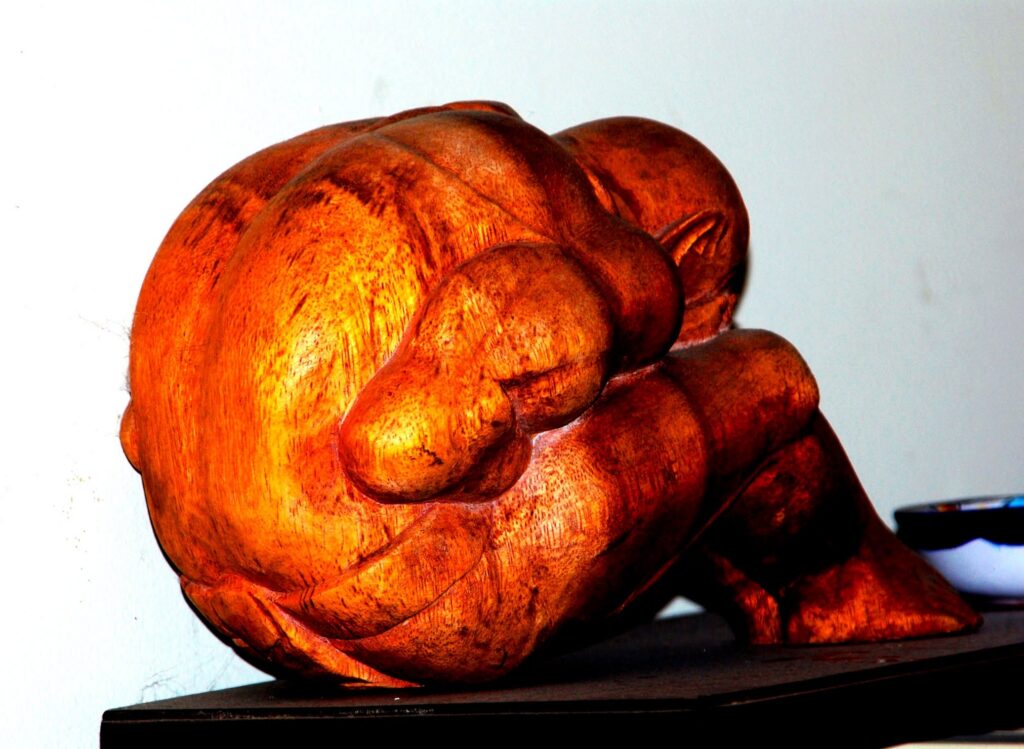
Image or symbol of the suffering

The suffering seems to be relentless and there seems to be no way out. My mother used to call this feeling kujithuba. This depicts the physical act of finding a muyombo or any tree and then stripping the fiber off of the tree or branch. Except this is applied to a human being when they experience extreme suffering of the soul.
The Suffering Soul
The soul is the seat of our lives that gives us, shows us, or reflects life (umoyo) in us. In my mother language or tongue of the Tumbuka language, the soul is what the sign of umoyo is. It is that glint in our eyes, the smile, the loud belly laughter, the twinkle in our eyes, the contorted face of anger and deep disappointment, the grimace of emotional and physical pain.
When the persistent severe suffering that has turned into kuzingiziwa, it creates rapture in our soul. We may cry or wail loudly, sob publicly or privately, heaving our chest up down with excessive hot tears continuously gashing out of our eyes down our cheeks often defying any wiping. Excessive mucous come out of our noses at the same time making our contorted faces of pain and grief very messy. This suffering soul rapture lays us bare to others making us feel so emotionally exposed and naked. This is why the vast majority of people will express soul rapture in private or behind closed doors.
Some people avoid soul rapture completely. Unfortunately, too many people suppress rapture of the suffering soul that is experiencing kuzingiziwa Western society has taught us that it is shameful to experience or express soul rapture before others or in public. This is the message often conveyed when people say they need privacy when they mourn a lost loved one.
The suffering soul is both an expression and gateway to love. Show me a person who has never experienced rapture of the soul in suffering, you will show me a person who may have never experienced deep love. The suffering soul and deep love are inextricably linked; one in not possible without the other.
The Mystery of the Suffering Soul
My earliest memories of suffering were not in my Zambian or African village. While living in my village as a child I experienced physical pain. I had one or two sores on my feet in the rainy season that never healed. I suffered from malaria numerous times. I had the debilitating and chronic schistosomiasis or bilharzia tropical parasite. We never had any of the material possessions that are associated with lack of suffering to day. What I had was more than a hundred relatives and friends; parents, grandparents, uncles, cousins, sisters, brothers, and aunts. They all loved me every single day. We grew and had plenty of food. I have characterized the blissful carefree life during which I was surrounded with emotional security and tranquility as a child as having been heaven on earth. Adults were most likely experiencing suffering of the soul of various levels of intensity.
My earliest memories of the suffering of my soul is when at the age of ten I had to attend Tamanda Boys Boarding School to begin standard 3 or grade 5 in 1964. The first day and night among strangers away from the village, my mother, father, sisters and brothers created suffering of the soul. I and my fellow students had to find ways and means of coping with the suffering of our souls.
Anguish of the Suffering Soul
Emotional separation is the most severe form of suffering of the soul in humans often under brutal conditions of kuzingiziwa among us. This happens when someone we love dies, divorce in marriage and families, when we are in prison or jail, we experience hunger and poverty, when we are victims of any physical and emotional abuse, and when we break up with someone we love deeply in romantic love. Suffering of the souls on a massive scale happens when humans commit horrendous sins, torture, and evil on a massive scale.
A few examples are the European Atlantic Slave Trade of over ten million Africans and the introduction of European imperialism and colonialism in Asia, the New World, and Africa. The NAZI holocaust and concentration camps in Hitler Germany in which 6 millions Jews were killed in gas chambers. The racist policies of the former white apartheid government in South Africa. The First and Second World wars and all wars cause massive suffering of the souls including the current wars in Syria and the rise of ISIS and Boko Haram in Nigeria. The killing fields of Cambodia in the 1970s and the Rwanda genocide of 1994. The current war which Russia in waging in Ukraine.


Sani Zibalwe Tembo June 19, 1918 – July 12, 2026

by

Mwizenge S. Tembo, Ph. D.

Emeritus Professor of Sociology

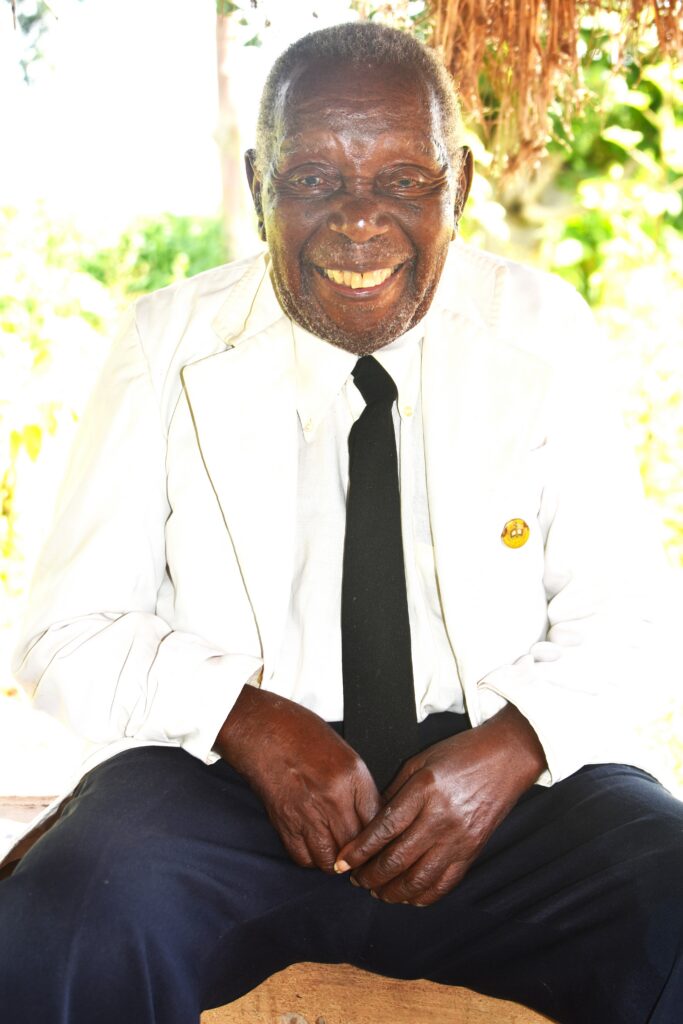
Sani Zibalwe Tembo was born June 19, 1918, at Zibalwe Village in Chief Magodi in the Lundazi district of the Eastern Province of Zambia in Southern Africa. His father was the founder and Headman of the Village. Sani Zibalwe Tembo was 108 years old.

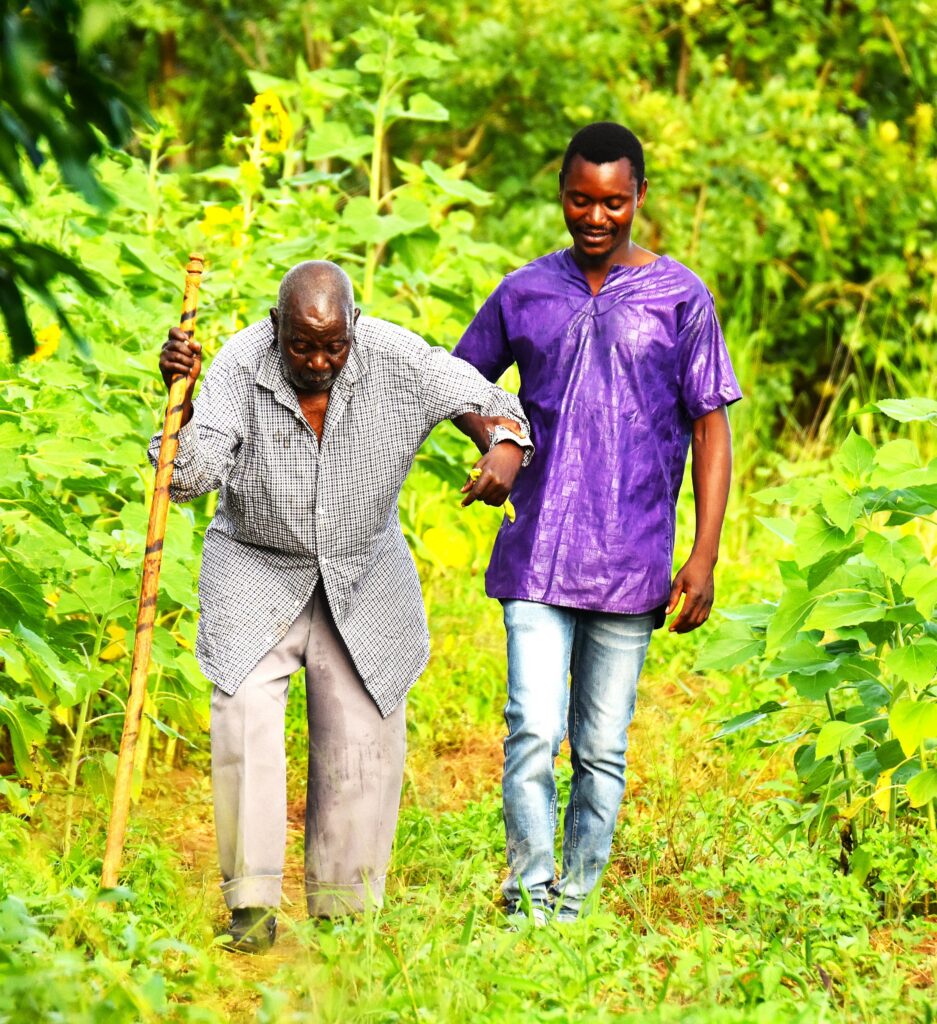
Sani Zibalwe Tembo walking with help of his grandson Obbie Tembo.

The British Colonial government in Northern Rhodesia introduced schools in Chief Magodi’s area in the early 1900s. His father decided that his son would enroll and try this new thing that the British called “school”. Sani attended Sub A or Grade 1 at the school that was located right in his own village at Zibalwe village in 1926. He was a bright student and liked schooling so much that he completed Standard 4 at Chasefu School near Chief Magodi in 1950.

Sani Tembo married his wife Enelesi Kabinda (a NyaNthula, a Mphikira Nkhondo) from Chipewa Village in 1946.

His father Headman Zibalwe was killed by a lion and his mother a Vayeya died of natural causes. Sani Zibalwe Tembo grew up as an orphan at a young age. Sani Tembo moved to Seleta Village to live with his uncle John  Mayovu or aYamise and his aunt a Dolase Zimba or aMtuma. Many people at Seleta Village helped to raise Sani Tembo including Ciurazeru Nyoni and Zemba Nyoni

Sani Tembo taught as an untrained teacher for several years around his home area, including at Nyalubanga School in the early 1950s. The British Colonial government and the Dutch Reformed Church Mission recognized Sani Zibalwe Tembo’s outstanding skills as an untrained teacher that he was selected to attend the prestigious Katete Dutch Mission Teacher Training College in 1955. He attended the training with his wife Enelesi Kabinda by his side and their children at the time: first born Kabuthu Mary Stella (Mrs Mtonga), Mwangata Christina Bridget (Mrs Zimba), Yakhobe Jacob Mwizenge, Negrace or Neggy. Sani Tembo completed his teacher training course in 1958. In 1959 he was given his first teaching assignment at Chasela Primary School in the Eastern Province of Zambia in the Luangwa Valley during British colonialism in Northern Rhodesia and now independent Zambia.

Sani Zibalwe Tembo at his home at Zibalwe Village

Sani Zibalwe Tembo performed his outstanding duties as a dedicated teacher for 25 years from 1950 to 1975 when he retired. He taught at more than 8 schools during this period including many in Chipata, and Lundazi districts, which included Chasera Primary School, Mafuta, Dzoole, Kapongolo, Kasonjola, Gundani, Nyongo, and Kapatamoyo Primary Schools. He taught the school subjects such as Math, English, Geography, Religious Knowledge so effectively that he inspired his students to have passion, great imagination and love for knowledge. Sani Tembo went beyond and outside the classrooms because he and his late wife Enelesi Kabinda who died in 2018, often helped many students who may have been poor and needed emotional and financial support as many faced untold hardships in boarding schools while away from home during their schooling endeavors.

Because of his teaching and helping students outside the classroom, the University of Lusaka established the annual Sani Zibalwe Tembo Lifetime Teaching award to be given at every annual graduation ceremony. The first winner of the annual Sani Zibalwe Tembo Lifetime Teaching award is Ms. Mwaka Chizinga who is the Executive Dean of the School of Law at University of Lusaka (UNILUS) Silverest Campus. The graduation ceremony was on April 23, 2026.

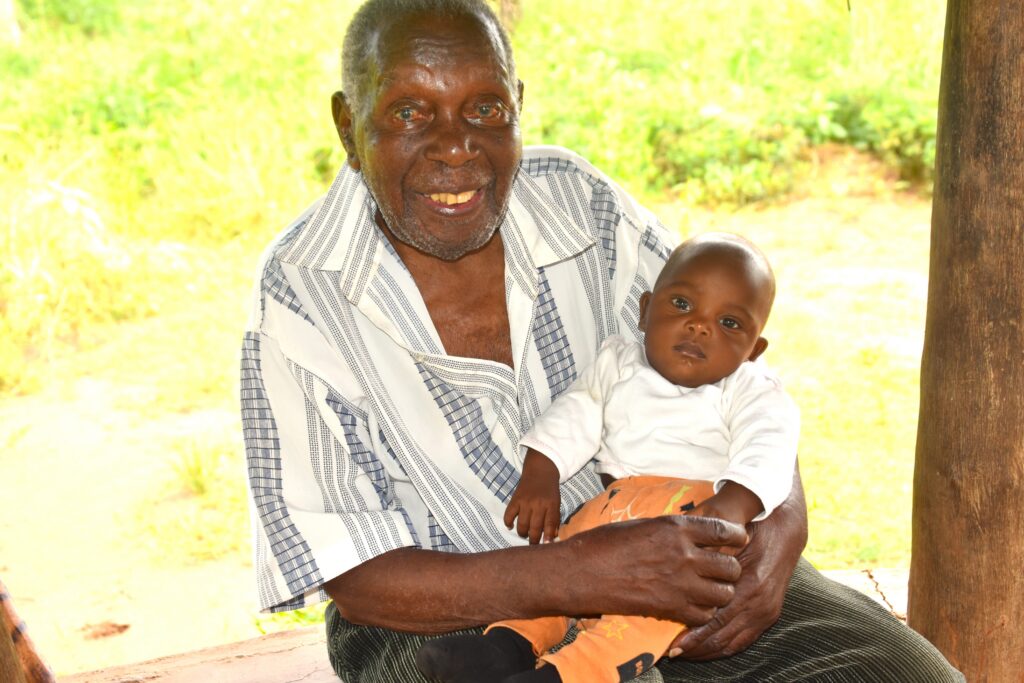
Sani Zibalwe Tembo holding a great great grand child.

The award would not have been possible without the tireless efforts from one of Sani Zibalwe Tembo’s former pupils or students from 1959 at Chasera Primary School in the Luangwa Valley, Professor Evance Kalura who now lives in Cape town in South Africa. We should be thankful to Professor Pinalo Chifwanakeni who is the Vice-Chancellor of the University of Lusaka (UNILUS) for this lifetime gesture of recognition for Sani Zibalwe Tembo.

After he retired from teaching in 1975, he first settled at his uncle’s village at Seleta Village. After a few years he returned to Zibalwe Village where he was the Headman for ten years. As a Headman and former schoolteacher, he was very much involved or active in church, community activities and regional development projects and meetings in the area in the Northwestern region of Lundazi in the Nkhanga area. Sani Zibalwe Tembo has had so many names and titles in his life.

He was the consummate and ultimate genealogist as he could describe the kinship relationships between people from dozens of villages in the area with precise details going back to the 1920s and even from when the Ngoni crossed the Zambezi River in their migration from South Africa.

Many know him as former teacher. His biological children and others in the Tumbuka culture called him adada (father). some called him asibweni (uncle), many grand and great grandchildren called him agogo (grandfather). At one time in the 1990s some at Zibalwe Village called him aFwasa patali (one who travels far and is comfortable among strangers). Recently, Sani Tembo called himself Mthwika dongo (one who carries the weight of the soil or the world). His wife Enelesi Nya Kabinda called Sani Tembo the forever endearing name in the family “awise Negi” or the father of Neggy. He and his wife had 9 children; 6 girls and 3 boys. Kabuthu Mary Stella (1947), Mwangata Christina Bridget (1949) (who died in 2018), Yakhobe Jacob Jack Mwizenge (1954), Neggy Negrace (1957), Ester (1961), Phaskani Vincent (1963), Matyewo Zebby (1967), Manase Theresa (1969), and Babu Barbara (1972)

Sani Zibalwe Tembo touched so many lives in his 108 years of life. He will be missed especially by many who will be gathered at Zibalwe Village for his funeral, by those who knew him in the whole of Zambia and the world. His burial is on July 15, 2026.