World Cup Soccer Memories

by

Mwizenge S. Tembo, Ph. D.

Emeritus Professor of Sociology

The United States, Mexico, and Canada are hosting the soccer world cup from June 11 to July 19. As the date approached, for the first time since 1982 when I watched my first televised world cup, I hated this year’s world cup. I was determined not to enjoy it. I have great memories of past world cups.

There is the American and Israeli war against Iran, small boats full of human beings are being bombed in the Caribbean, the US is blockading Cuba, rising gas prices, the tariffs whiplash, numerous outrageous national and international scandals coming out of the White House what seems like every second of every day.
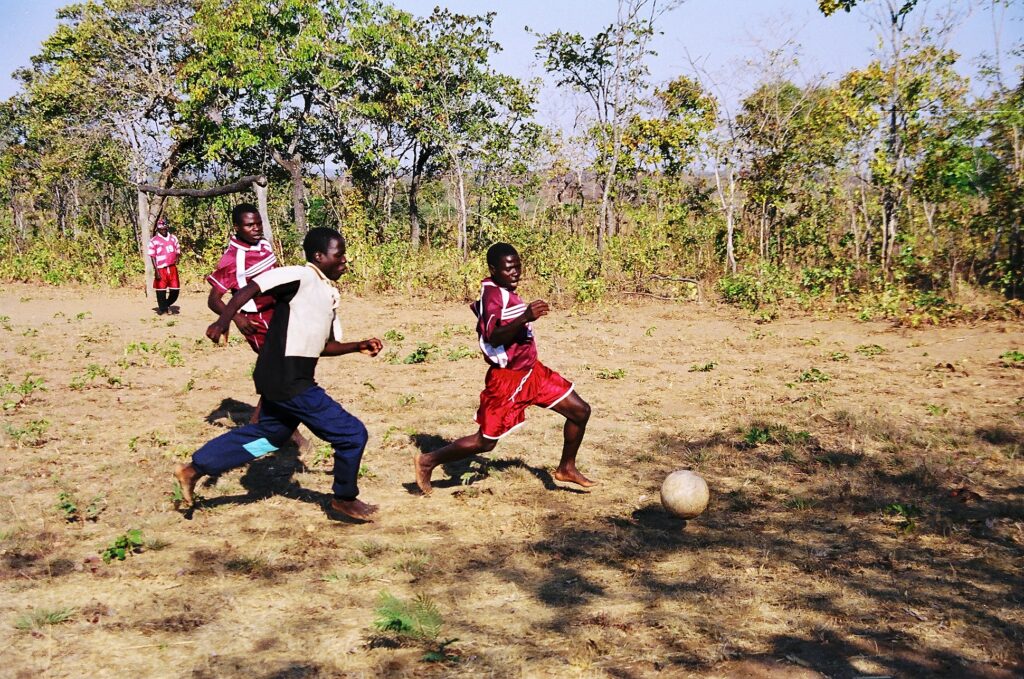
Soccer or football is played in some of the most rugged environments. These are players at Kamzati Village football field in Lundazi district in rural Eastern Province of Zambia in Southern Africa in 2002.

The White House banned certain countries and their fans from coming to America. Most of the banned countries are from Africa and the Middle East. The tickets are too expensive. On the first day of player arrivals in the United States, players and officials from Senegal and a few select countries were subjected to degrading security searches on the open airport tarmac, etc. etc. While players from Spain or Europe simply happily breezed through airport terminal customs to welcoming American crowd cheers and waving at the airports. There is a general lingering mood of national tension and exhaustion in the country.

As one person, I wanted to boycott these games. The vibes for this year’s world cup did not feel right. I wanted to feel the past joy of anticipation and excitement prior to previous world cups. But there were too many shenanigans a year before the first game was played in Mexico.

I reluctantly watched the opening game between Mexico and South Africa. A few days into watching the games, I remembered a popular soulful inspirational sentimental song about memories. I like Andy Williams rendition of “The Way We \Were” the song whose last few lyrics say:

Memories

May be beautiful and yet

What’s too painful to remember

We simply choose to forget

So, it’s the laughter

We will remember

Whenever we remember

The way we were

The way we were

I am warming up to this year’s world cup. These lyrics may apply to our country’s turbulent political life over the last 10 years since 2016. This world cup for the first time has 48 teams participating in 104 games. After watching a few games, feel good stories are coming out.

The African Algerian national soccer team is using Lawrence in Kansa as its training camp and home base. The locals have adopted the team. They are waving Algerian flags in the town; the local high school band has learned how to play the Algerian national anthem. The students stand at the team practice field and play the Algerian national anthem for them to the players’ pleasant surprise. At their practice, the team invited local kids to kick the ball around with them. Can you imagine what great memories those kids will have in Kansas about the 2026 soccer world cup?

The fans inside and outside the 16 stadiums are having great fun. After each goal I see images of some thrilled fans in the stadium jumping and tossing their babies and toddlers in the air like vegetable stir fry. Pure joy ecstasy.

The bagpipers of the Scottish team fans have taken over towns and march to the stadiums along with throngs of excited crowds. The Scottish fans while in Boston had bars run out of beer. For the first time, the small islands of Curacao and Cape Verde have played in this World cup. Haiti’s national team has never played a home game in their country because there is so much violence at home.

This is the best American team in many recent world cups. To my sweet amazement, I have seen some of the  players make some individual plays only the best Brazilian players make. The American men’s soccer team may be changing for the better right in front of our eyes. The American team is no longer a laughing stock. The top star strikers in the world have scored multiple goals; Messi of Argentina 5 goals, Mbappe of France 4 goals, and Brazil Vinícius Júnior 4.

We all may have great memories of the world cup and even events in our personal lives in general. But like the lyrics of the song “The Way We were”, we all remember positive memories but often what is too painful we choose to forget. I am realizing as I watch the world cup games, I am creating great memories for myself. The bad things that are happening, my mind will eventually choose to forget. I will choose the laughter and the sheer excitement as I watch the games with the 3 billion other people. I just talked to an African Zambian woman currently living in Bangladesh. Because of the time differences, she is watching the world cup games sometimes at 4:00am.
Why is the Ngoni Bemba Mbuyaship Powdering Exploding?

by

Mwizenge S. Tembo, Ph. D.

Emeritus Professor of Sociology

Since the Paramount Chief Mpezeni IV of the Ngoni people of Zambia passed away on May 30, 2026, at the age of 75, the incidents of public powdering are exploding. The powderings are taken as endearing symbols of the strong chiMbuyaship between the Ngoni and Bemba people among the mourners at the funeral. Some of the powderings seem to have gotten out of hand. I have seen images on social media of powderings of a dog, babies, children, powderings that appear to be ambushing incidents in vehicles, and offices. There is a social media video of mourners panicking, scrambling in a mass commotion as there was a huge white thick  plume of powdering clouds among the mourners at the Chief Mpezeni funeral. What I found even more shocking was a social media image of a white muzungu woman at the British High Commission in Lusaka powdering a young Zambian woman. This appears to have been not even at the funeral of Chief Mpezeni. This is absolute mayhem. What is happening?

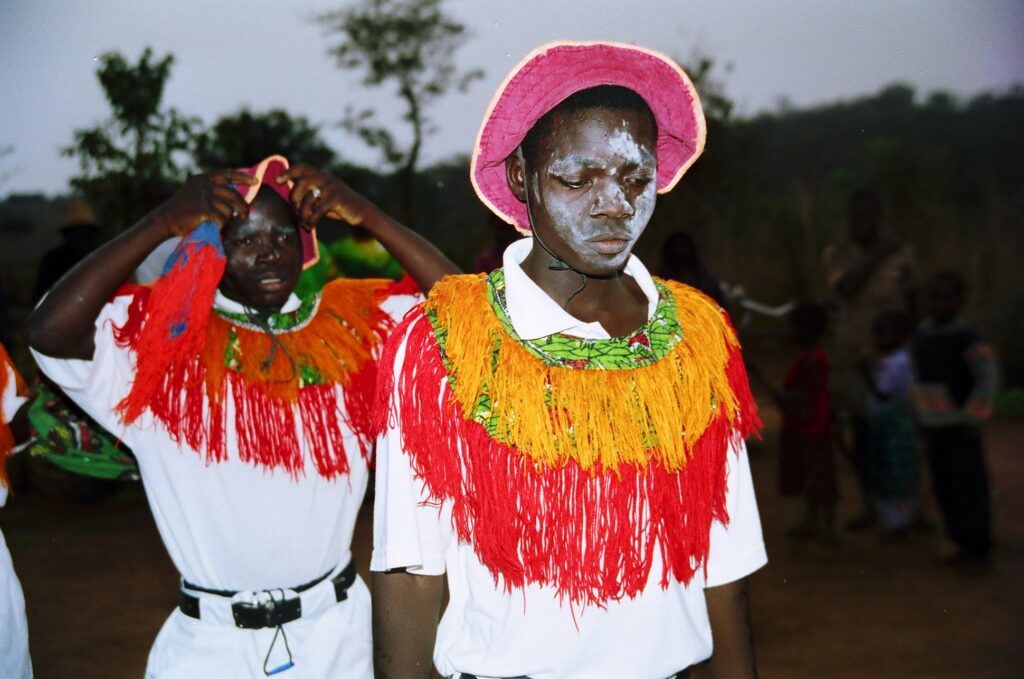
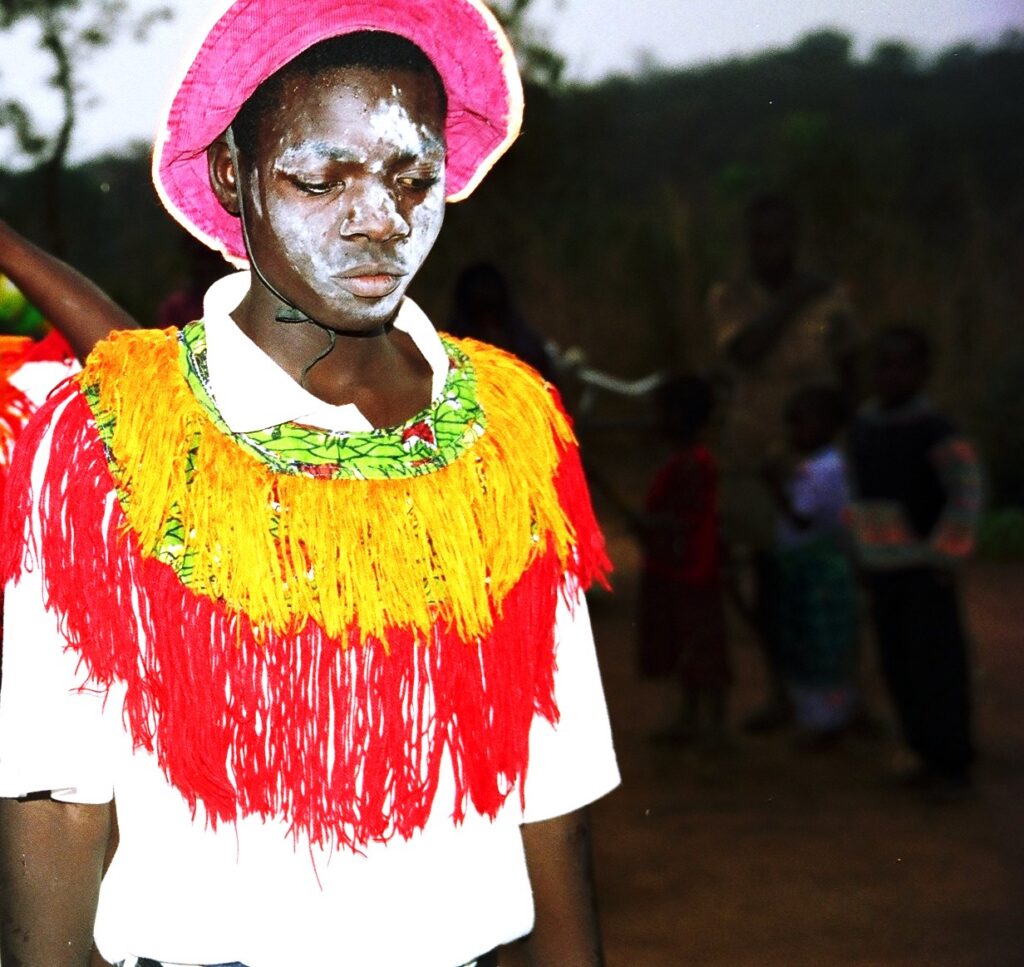
Tumbuka young man mugandage dancer at Zibalwe Village in Chief Magodi in the Lundazi District of Eastern Province of Zambia in 2002

This article will define mbuyaship, mbuyaship between the Ngoni and Bemba, mbuyaship among other Zambia tribes, answer some important questions about mbuyaship, and why mbuyaship powdrings are exploding and spreading both at the Chief Mpezeni funeral and the Zambian society in general. Should something be done about curbing mbuyaship powderings?

The Ngoni and the Bemba were involved in numerous battles and wars in the 1800s. Neither one could defeat the other. So, the two tribes decided to defuse their fighting, frequent conflict and hostility by establishing chimbuya. This is the relationship of joking with and teasing each other which is also very central between cousins or in cousinship among kinship relationships in Zambian traditional society. The powderings are a playful and relatively harmless expression of this mbuyaship.

There are mbuyaships that exist between other tribes, for example between the Lozi and Tonga. I have recently learned that there are mbuyaship relationships among some tribes in the Northwestern province that may include the Luvale, Lunda, Ndembo, Kaonda, Luchazi and Chokwe. Some Zambians are asking questions. Besides the Ngoni there are other tribes in the Eastern Province who are not Ngoni. These include the Nsenga, the Senga, the Tumbuka, the Chewa, and the Kunda. Should these tribes also take part in the Ngoni Bemba mbuyaship? Similarly, beside the Bemba in the Northern Province, other tribes include the Lala, Aushi, Bisa, Shila, Lungu, Mambwe, Namwanga and Tabwa. Should these tribes who are not directly Bemba also participate in the Ngoni Bemba Mbuyaship?

Can anyone who is not your peer, not the same age, gender, or same status powder you? Can an individual who doesn’t know you or with whom you do not socialize powder you? For how long should the powdering take place before the burial at the funeral before it has to stop? Is the aim of chimbuya powdering  to raise money to help the grieving family? 

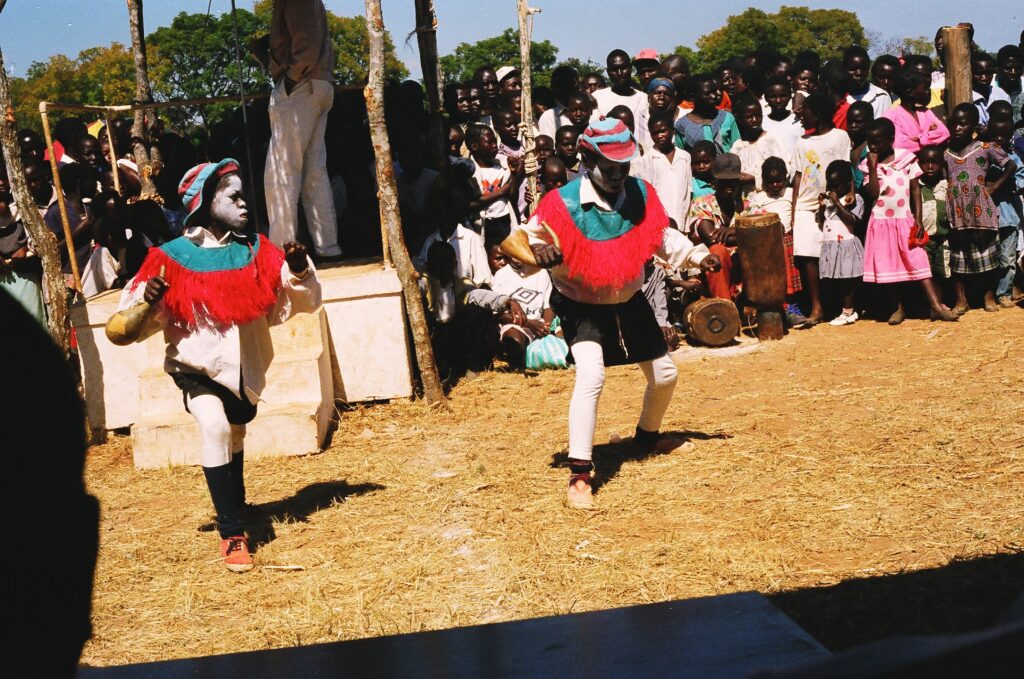
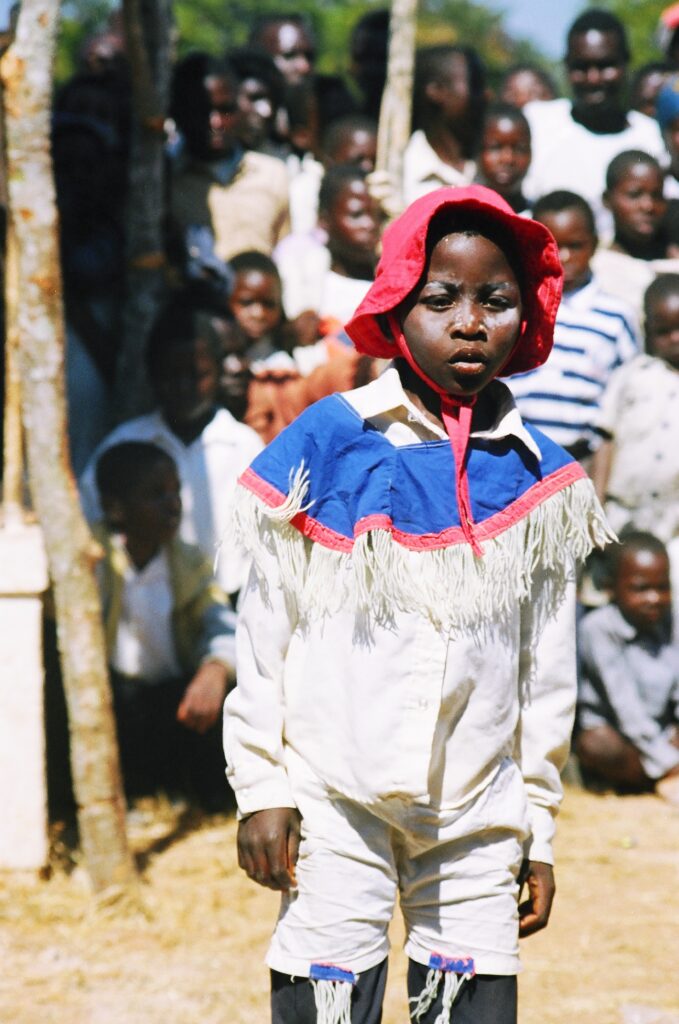
A young boy muganda dancer at Lundazi Boma Agricultural Show in August 1996 in the Eastern Province of Zambia.

My understanding is that powdering is only between people who know each other very well and are close friends. For example, I have a Bemba friend’s sister with whom I am very close. We have known each other for the last 49 years. If she powdered me at a funeral or I powdered her, both of us would probably giggle and laugh even though we would be grieving and mourning the loss of a loved one. This is one of the main purposes of mbuyaship; to express love and solidarity, and at the same time lighten the moment a little even though we might be very sad and grieving.

The members of the Ngoni Bemba mbuyaship have other ways of expressing their mbuyaship which includes teasing through talking during what the Tumbuka call kukhuziska at a funeral. The mbuyaship does not have to focus on powdering although powdering is perhaps the most dramatic, and visible to everyone and garners immediate visual attention. 

Every important cultural activity in all societies including in Zambia has rules, takes place at an appropriate place, surrounding, and time. Marriage ceremonies and weddings take place in the church where couples exchange marriage vows. This takes place in decorated hall, room or in front of a beautifully decorated hut, home, or house. School takes place in a classroom during the days of the week and not on weekends. Mbuyaship powdering should strictly happen at the house or location of mourning and before burial at the cemetery or graveyard. The rules of mbuyaship should be followed. Powdering should never happen at any other arbitrary random public places or in offices far away from the place for mourning and funeral, cemetery, or graveyard prior to burial of the deceased person.

Threats of powdering should not be used to raise funds for the grieving family. I have attended many Ngoni Bemba funerals during which a plate is passed around and many mourners including myself have made donations.

There are two major reasons why powdering as an expression of mbuyaship is exploding and spreading to the general Zambian public. First, the rules and strict customs that elders may have enforced in the village in the 1800s among the Ngoni and Bemba are no longer being passed to the younger urbanized Zambians. Most of the tribal elders have died. Many Zambians do not live in Villages anymore. The youth spend many hours on cell phones watching videos including ones of powedring. Short videos do not show the cultural context of powdering. The youth lack clear guidance in how to behave and conduct mbuyaship especially at funerals.

Second, Zambians who are outsiders to the mbuyaship see very humiliating excessive powdering which degrades the person’s dignity. They see both actors often smiling and joking during the powdering. No one is being punished or arrested by the police for what looks to outsiders as physical assault and public humiliation that should be annoying.  Men do not exchange blows. This looks like something very exciting that many outside observers are envious of and want to participate in the exciting action. 

Last week, I saw a smiling Ngoni member of parliament who had been severely powdered on his head, face and shoulders standing up and addressing parliament in the Parliament of Zambia. The woman speaker of parliament looked nervous and amused. This is why the widespread out of control powdering must be reined in.

The population of Zambia is 22.4 million. An estimated 75% to 80% of Zambia’s population is under the age of 30 which is about 17 to 18 million youths. Zambia has an estimated urban population of 47% or over 10 million people. The most important point is that  in terms of the customs and rules of mbuyaship and the spreading of powdering, there are very few or no surviving adult elders to teach the youth the customs. Most of the youth may not live in rural area villages where most of the traditional customs were passed on to the young or youth. Because of the lack of guidance regarding the strict rules, I have seen reports that Bemba young people at the Chief Mpezeni funeral were so disruptive that they wanted to powder the Catholic Clergy who were about to preside over the funeral and burial. The Ngoni or Nyanja speakers would say the Bemba youth were acting with mawala, mphuvya, and with vingazi. All this means is the Bemba young people in question were acting  recklessly and were misguided.

The traditional leadership of the Ngoni and the Bemba must publicly spell out and enforce the rules and the customs. All traditional rulers must follow suit in spelling out and enforcing the mbuyaship rules particularly powdering. The government should never be involved in regulating these mbuyaship traditions.

Ngoni Bemba Mbuyaship Powdering During Mpezeni Funeral

by

Mwizenge S. Tembo, Ph. D.

Emeritus Professor of Sociology

Since the Paramount Chief Mpezeni IV of the Ngoni people of Zambia passed away on May 30, 2026, at the age of 75, there have been many public and personal reactions among my fellow Zambians. While the 22.5 million Zambians learned the sad news through the media, what has garnered a lot of attention are what appear to be offensive images on social media. These images appear to be videos of one or two Zambian men apprehending another Zambian man who is smart looking, wearing clean clothes with a tie being smeared with white stuff all over the face, the head and hair, the neck, and chest. The victim appears embarrassing, funny, degraded, and humiliated. This is called powdering among Zambians, and it is not new. This article will discuss what Mbuyaship is, what powdering is, what its purpose is, who is doing the powdering now and who is the target, why are individuals powdering others, and who can participate in the powdering and who should not participate in the powdering. Last, the article will discuss cautions about powdering.

Mbuya is a noun which means grandfather or grandmother in languages particularly from the Eastern and Northern Provinces of Zambia. Another term for mbuya among the Tumbuka, Chewa, Ngoni in the Eastern Province and Malawi is agogo. The traditional deep kinship customs of mbuya or agogo going back hundreds of years is that the two individuals involved in the relationship joke, tease each other, and may sometimes playfully lightly wrestle with each other. That light playful physical contact is called kumphatana between cousins among the Tumbuka. This relationship of joking with and teasing each other is also very central between cousins or in cousinship. This mbuyaship is what exists today among the Bemba of Northern Province and the Ngoni of Eastern Province. How did this mbuyaship happen between the people from the 2 tribes? 

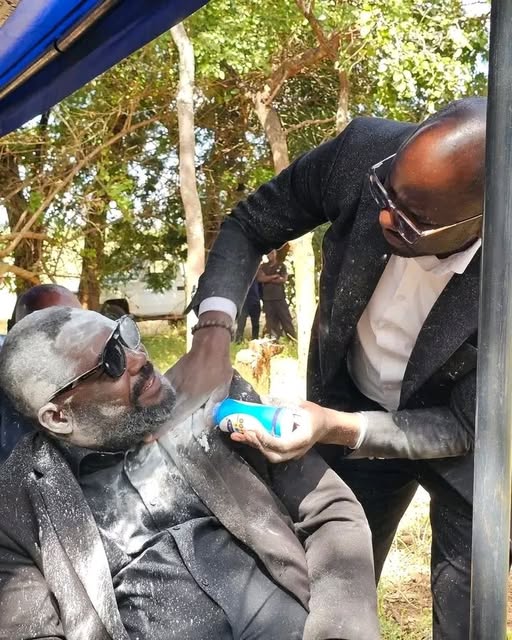
Chimbuya Dickson Jere being powdered

The reader might not appreciate the deep history of the Ngoni-Bemba mbuyaship  just by a 5-minute read in social media. The reader should read the book by the great Zambian Historiographer the late Yizenge Chondoka who dedicated most of his life to researching indigenous Zambian history. In Chapter 8 titled: “The Bemba-Nthuto Ngoni War and the Beginning of the Cousinship” in his book “The Zwangendaba Mpezeni Ngoni”, Chondoka says in the 1800s the Ngoni and Bemba fought numerous wars and battles.

“It is important to note that up to this day, the Bemba claim that they defeated the Nthuto-Ngoni, and that, that is why they left Bembaland. On the other hand, the Ngoni also claim that they defeated the Bemba but left their territory because the Bemba did not have enough cattle to fight for.” (Chandoka, 2017, p.71)

It was after these wars in the 1800s that the mbuyaship between the Ngoni and the Bemba started that exists up to this day in 2026 expressed during the funeral period after the death of Paramount Chief Mpezeni. But why are the Bemba powdering, and what the reader may regard as humiliating the Ngoni during this funeral?

Muganda dancer powdered face at my home Zibalwe village in Lundazi in 2002

What Zambians call powdering today is a very common practice deeply embedded in traditional Zambian culture. The white painting of the face and the whole body was very common among most of the 72 Zambian tribes. The painting was done when individuals were experiencing significant life events such as during marriage and wedding ceremonies, during funerals, and especially during initiation ceremonies (Chinamwali among the Ngoni and Chewa and Chisungu among the Bemba for girls) when boys and girls were transitioning from being boys to young men and girls to young women. Sometimes in some traditional dances among the 72 Zambian tribes, dancers may powder their faces and bodies. The anthropology scholar Victor Turner discusses rites of passage.  In his book “The Forest of Symbols: Aspects of Ndembu Ritual” Turner called the period of psychological transition the process and state of liminality.

Modern Zambian urban Bemba and Ngoni people may use modern white commercial powder. But traditionally, very fine white mealie-meal and cassava meal  used for cooking nshima were used for painting the head, face, and the body. There may also have been some white substances from trees in the bush that may have been used for powdering or painting the faces and bodies white.

The powdering that is happening from the Bemba of the Ngoni is to express and cement their mbuyaship during the mourning, funeral, and burial process. Next time there is a major death among the Bemba, the process of powdering will be reversed during which the Ngoni will powder the Bemba. The mbuyaship expresses love and solidarity between the individuals from the Ngoni and Bemba tribes that goes back to the 1800s. Whenever I have attended burials between we, the Ngoni and our cousins the Bemba in Lusaka during the last 50 years, the mbuyaship activities especially at the cemetery lighten the burden, the mourning and the burial process. The powdering injects some humor and lightens what is a deeply grieving occasion of mourning, loss of a loved one, and deep sadness. For those Zambians who may express concern that the powdering is ruining their clean clothes, face, and destroying their dignity, you should be aware that when Zambians attend funerals, the traditional custom is that they wear old used clothes for both men and women. To familiarize yourself with Zambian funeral customs, read Chapter 15 in my book “Satisfying Zambian Hunger for Culture (2012)” that describe funeral customs in Zambia.

Powdered faces of young boy Muganda dancers at Lundazi Boma in 1996

Who can powder who during the Paramount Chief Mpezeni mourning and funeral? Only individuals who belong to the Bemba tribe can powder the Ngoni mourners. It is a serious taboo for anyone who is not a Ngoni or Bemba to powder a mourner or to participate in the mbuyaship. The powdering is never meant for random people to run around aggressively powdering, harassing, and physically assaulting others during mourning and the funeral process. You can see in the photo that Mr. Dickson Jere who is being powdered by a Bemba is smiling.

As I was scrolling through social media, someone raised the issue that powdering the face, the eyes and nose may cause harm from talc in the commercial store-bought powder. The powder may cause painful eye irritation. What if someone is asthmatic and has other bronchial allergies to commercial powder? I would strongly recommend people use the traditional breakfast or other maize mealie-meal, cassava meal, or traditionally pounded white mealie meal.

There should be some reasonable logical places where powdering should be done. It might not be appropriate to do it at the office at work during working hours unless there is prior acceptance, agreement, or arrangement. Afterall, the Ngoni Bemba mbuyaship often happens between individuals who know each other very well. In case of the coming funeral and any other funerals, powdering is often best done in the physical environment of the premises of the mourning house and the cemetery.