by
Mwizenge S, Tembo, Ph. D.
Emeritus Professor of Sociology
I may have discovered that an American garden common weed is an edible or a vegetable which Zambians and I, as a Zambian, can eat. Should Americans, including everybody, eat this weed as a regular vegetable? The initial observation happened on July 23, 2026 at about 19:30 hours or 7:30 pm Eastern American time in Bridgewater in Virginia in the United States of America. Three days ago, I went to my garden in my backyard to fetch bondokotwe leaves to cook for my family and I to eat. It is a very tender Zambian vegetable that grows both wildly in the farm field in Zambia but one can also get commercial seeds from Zambia to grow it. I had planted bondokotwe for 3 straight years. It grows rather tall.
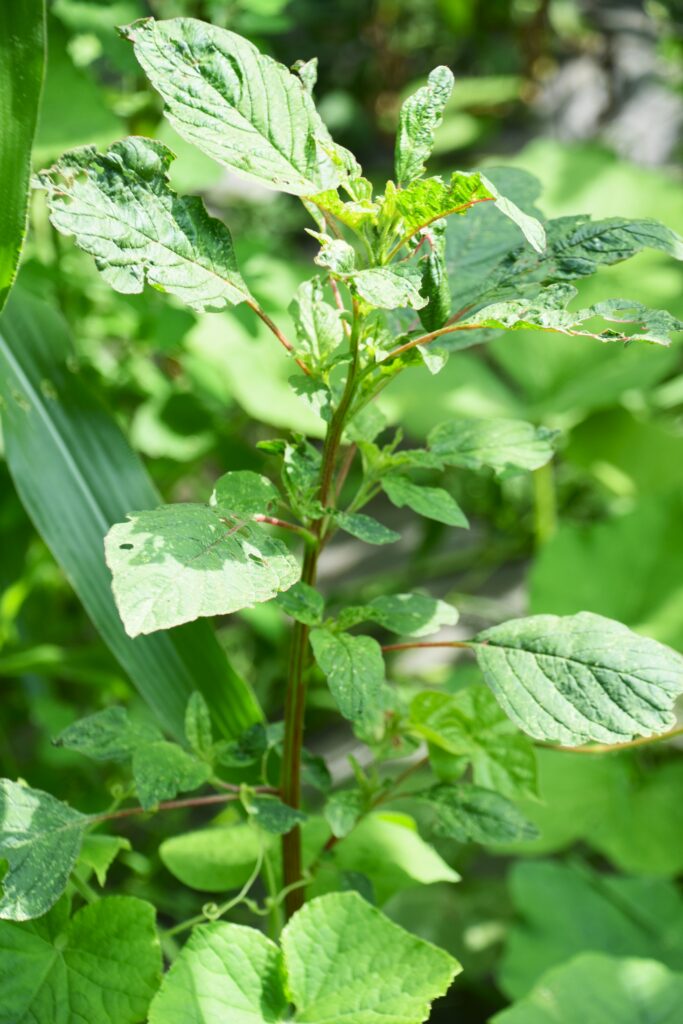
I was fetching and nipping off the leaves from the talk plants which were about 2 to 3 feet 0.60 to 0.91 meters tall. I noticed one of the tall reddish weeds growing wildly among the bondokotwe. I had to nip off the leaves carefully because I did not want to include the leaves from the wild weed. It just struck me that the 2 plants looked so similar I was getting confused. I didn’t think of it any further.
I took the bondokotwe leaves and cooked them in the usual Zambian away. I used some olive oil, diced onion and a few slices of tomato. I cooked the vegetables for 10 minutes. I had added some salt but tasting it I thought I had oversalted it. When my wife walked in from work I told her I might have oversalted her favorite tender Zambian vegetable. She later tasted it and said she didn’t think it was oversalted. It was alright.
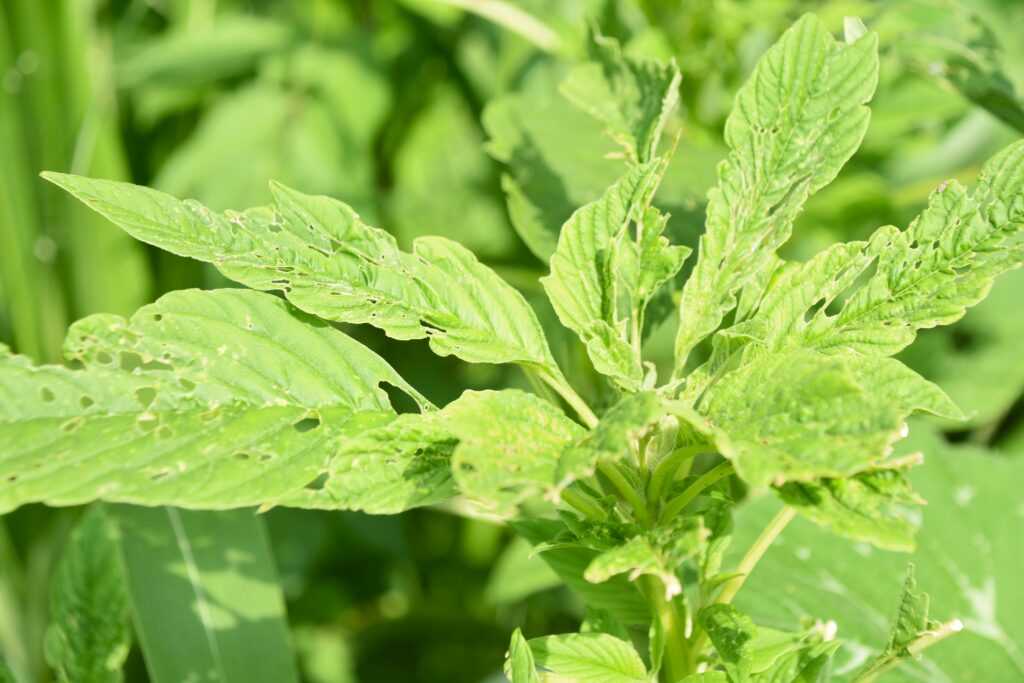
The following evening at 19:30, because it was a cool day, I picked the few dry tree leaves and dry twigs that the lawn mowers had piled up under the two trees in our front yard. I went into the back yard and cut some of the shrubs along the fence. I had to pass by the garden toward the tool shade when the eureka moment happened. I looked at the bondokotwe plants I had nipped leaves from and the tall weed that was right in the middle. The leaves looked very similar, although the stems of the weed plants had a reddish tinge. The bondokotwe stems were green. “What if I ate the leaves of the weeds, would I die?” Why? This is what I used to tell my anthropology students for 31 years. How can you tell if a wild plant or mushroom is not poisonous if you are lost in the woods or wilderness for days and cannot find any food to eat to survive? If ants and other creatures are eating it, then whatever it is might be safe for humans to eat. Bingo!!!
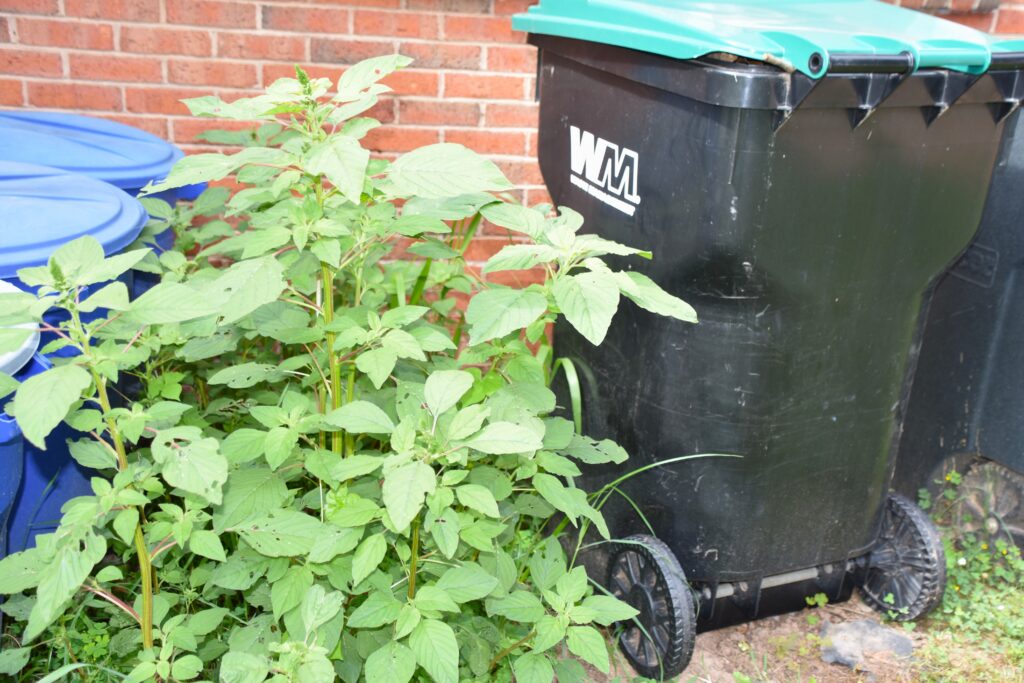
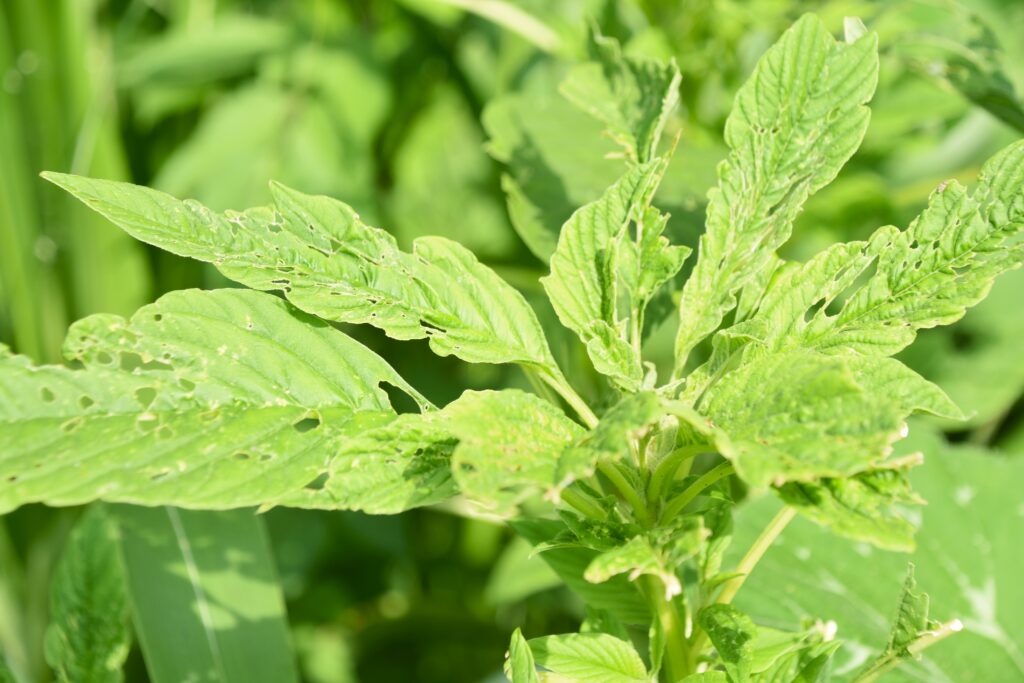
The bondokotwe leaves and wild American weeds had both been eaten by insects. I never ever spray my garden with any insecticides or pesticides since I began gardening on this patch in 1990 or 36 years ago. It was then that I noticed that the American Bondo-looking weeds were also growing along the edge of the house too near the large trash or rubbish bins, cans or containers. This was my big moment of discovery. Tomorrow I will cook the leaves and eat them. Will I find that somebody in the US has already discovered this? Will someone claim that Aristotle (384-322B.C) the philosopher ate these same weeds as a vegetable in ancient Greece? This would ruin my discovery.
July 25, 2026.
At 18:00 hours or 23:30hours Zambian time, I walked into my backyard and started my memorable testing. I nipped the leaves from the American garden weeds that had grown to 2 to 3 feet or 0.60 or 0.91 meters tall. I took them to the kitchen. I cut them and diced a small tomato and onion. I poured a tablespoon of olive oil in the pot. I poured the vegetables into the pot and began to cook them at 18.50hours. Ten minutes later at 19:00hours, I put a tablespoon of the vegetable on a small plate and calmly ate it. It was tasty with a normal mild dark vegetable slight bitterness edge. I waited for 10 minutes to 19:10 hours to see if the vegetable was poisonous. I was alright. I did not faint or break into a horrible sweat with a churning stomach. This weed was a delicious vegetable.
So, on July 25 during the year of our Lord in two thousand and twenty-six, I Mwizenge Tembo professor of Sociology from the town of Bridgewater discovered the American common garden weed to be an edible vegetable identical to Zambian bondokotwe vegetable. From now to the end of time, this American common vegetable weed shall be named or called to include Zambian name “Tembo Bondokotwe Americanus”. The short name will be “Tembo Bondo”. I shared the great exciting news with my first-born son who had just finished eating his dinner. I walked with him to the garden, showed him the American common garden weed that I had just cooked and eaten. My son who is a hotel cook was amused. I told him that tomorrow I would eat the new Tembo Bondo with the Zambian nshima meal.