by
Mwizenge S. Tembo, Ph. D
Emeritus Professor of Sociology
Introduction
Since the early 1900s when the whole world was able to communicate through the radio, the only way you could listen to news about Zambia was through the short-wave radio. This is what I did for decades especially when I lived ten thousand miles or sixteen thousand kms away from Zambia. But since the invention of the internet, I am able sometimes to briefly listen to radio stations from Zambia through internet streaming.
One day, I happened to tune to a Zambian radio station in 2022. It was President Hakainde Hichilema addressing a large crowd either in Livingstone or near the Katima Mulilo border. Zambia Army and Zambia Air Force cadets were in attendance. As he addressed the large gathering, I heard President Hichilema say…..”We Zambians must believe in One Zambia One Nation and hard work. We must love one another. We have to avoid tribalism……we must live in unity…..” As I listened, I realized that he had only been elected the previous year. The message sounded like what our founder President Kaunda and the founders of Zambia leadership used to always say in numerous public political rallies and speeches from 1964 to 1991. It suddenly occurred to me at that time in 2022 that Zambia’s political future was in good hands.
2021 Presidential Campaign
I was in Zambia during the electoral campaigns leading to the 2021 Presidential elections. President Hichilema at the time was the major opposition candidate leading the United Party for National Development (UPND). I have listened to the radio since I was 5 years old 66 years ago in 1960. I listened to opposition candidate Hichilema at the time in 2016 and 2021 on Komboni radio while I was in Zambia at the time. I liked his voice so much that I thought at the time that he should go into radio if his political career faltered.
There have been a lot of tensions since the August 13 Presidential elections in Zambia. I feel a certain patriotic obligation due to the love of Zambia to offer all 22.5 million Zambians some advice on Zambia’s political future. As a Zambian reader, the immediate questions you might ask are “Who is this ka Tembo who claims to be a professor? Who is he to offer advice? What does he know about us Zambians? Is he one of these opportunistic foreign Zambian diaspora political impostors? Was ka Tembo a Miniter or Managing Director, President of a political party in Zambia?” Did he vote for Hakainde? The answer to all these questions is No.
About the Article
In this article I will first describe who I am because that will establish my credibility. Second, I will discuss the political crisis in Zambia right now. Third, I will briefly discuss Zambian political history and the non-sense I have heard among us Zambians since 1991 that a Zambian from a particular or specific tribe will never be elected President of Zambia. Fourth, I will discuss the August 13 Presidential elections difference between critical political analysis and negativity. Fifth, I will give my unsolicited candid advice to President elect Hakainde Hichilema and UPND. Last, I will advise all my fellow 22.5 million Zambians about the political future of our country.
Credibility of Author
I went to the prestigious Chizongwe Secondary School from 1967 to 1971. I graduated from the prestigious and exclusive and only University of Zambia from 1972 to 1976 graduating with a Bachelor of Arts degree in Psychology and Sociology. I obtained my Ph. D. in Sociology at Michigan State University in the United States in 1987. I am now Emeritus Professor of Sociology.
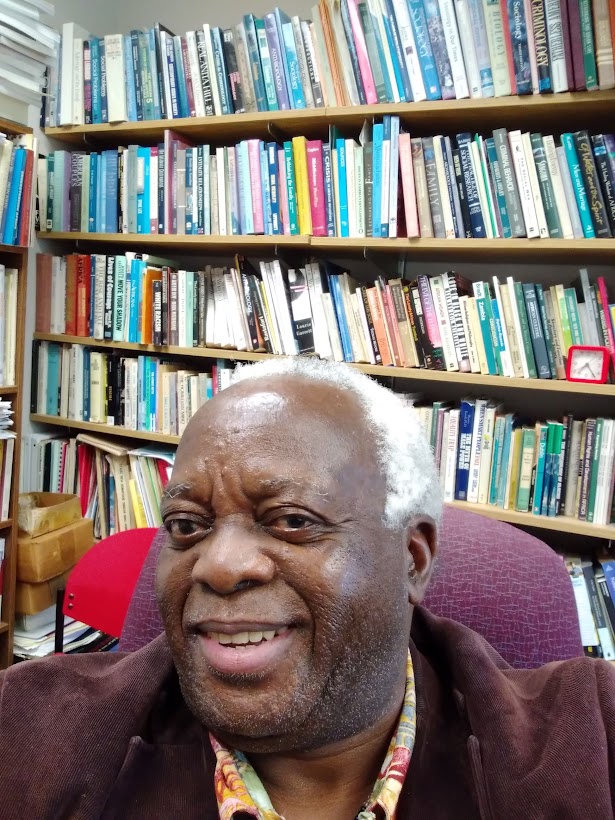
I am highly trained in quantitative and qualitative methods and especially research that compares culture and nations including scrutinizing voting results. I lectured and conducted research at the University of Zambia Institute of African Studies for 10 years where I conducted field research in the Eastern and Southern Provinces. I was a professor at Bridgewater College in the United States for 31 years until I retired in 2021. The experience that I am most proud of is that I grew up in the village at Chipewa Village in Lundazi in 1960 when I was 5 years old. I am familiar with and live a life in which I live with Zambians who are in the remote rural villages and those in the cities and towns. Lusaka is my home. I will be 72 years next month and have experienced the political growth of Zambia since 1964 when I was 10 years old. There is more. But I hope this settles any reader’s doubt about my credibility since I have never been famous. I have no desire to be famous, or as some would dismissively say today “create content” but only to be helpful at this crucial time to my fellow 22.5 million Zambians.
Zambia Political Crisis
The political crisis in Zambia right now is about incidents surrounding the recent August 13 Presidential elections. The counting of the votes was suspended for a short period during that one day creating suspicions of rigging among the public. An opposition lawmaker Mutotwe Kafwaya was shot and killed during a post-election security raid at a property in Kabulonga linked to opposition presidential runner-up Brian Mundubile. Some of the opposition leaders have been arrested and detained. These incidents especially the death was tragic and everyone among Zambians has to be sorry. We have to rely on the courts and legal system to resolve these problems and create transparency. The political violence that would have surrounded the Presidential elections on a young Zambia that was only 5 years old in 1969 is why the country decided to have a One-Party State at that time 54 years ago in 1972. Some people today claim that because President Kaunda was a dictator, he alone decreed a One_Party state. That is not true. It was consensus from the Zambian public at the time in our history. I know because I was there when the One-Party State was created. In spite all the recent problems, our nation of Zambia is perhaps one of the best multiparty democracies in the world.
The Political Growth of Zambia
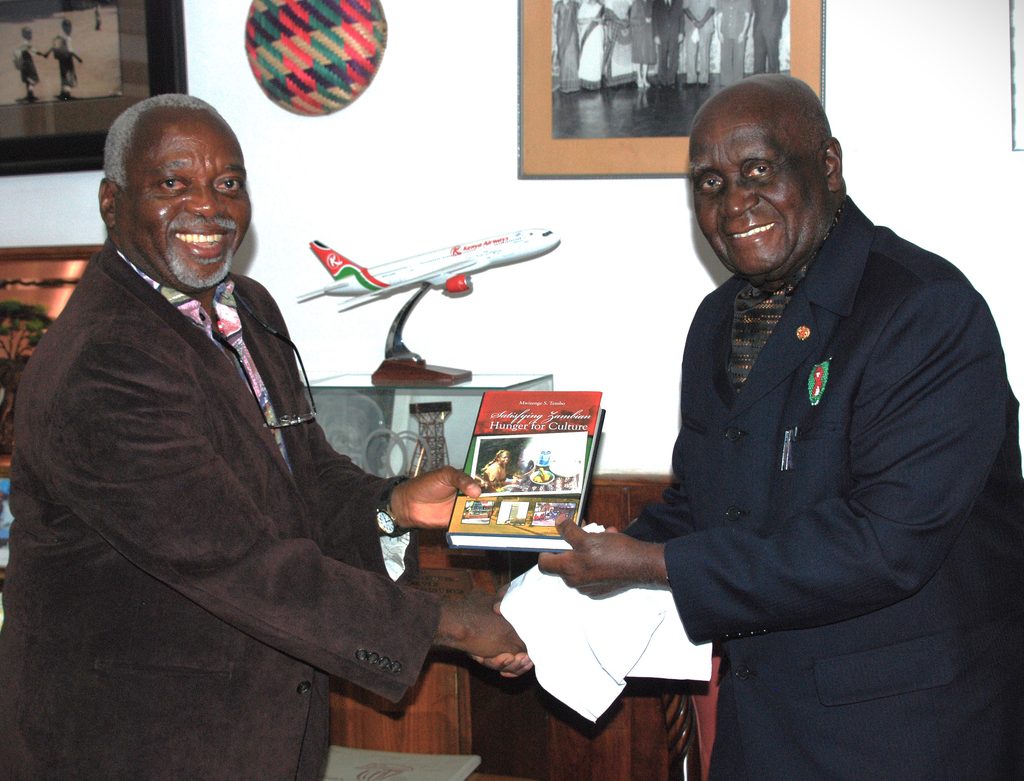
I have lived, witnessed and experienced the growth of politics in Zambia grow from 1962 to 2026 which is a period of 64 years. I have written a book titled: “Satisfying Zambian Hunger for Culture”. Chapter Nine discusses “How Zambians ruled and governed themselves in traditional and modern Zambia.” I describe as a nation how we evolved from One-Party State to the now vibrant multiparty democracy. The late Mr. James Mwape inspired me to personally written this book from which I have zero royalties. Everyone will assume I am just plugging the book because I want to be rich. This is wrong. President Kaunda wrote the Foreword to the book. There are only about 20 copies in Zambia of this very educational book for all Zambians. Please, get photocopies of the Chapter Nine of the book which will help you understand why we have a peaceful multiparty democracy in Zambia. We have had seven Presidents and peaceful transitions. Young countries and some older countries in the world have never had this wonderful experience which we Zambians have gone through since 1964.
The Worst Nonsense
The worst nonsense I have heard in Zambia since 1991 is at first some Zambians were saying “a Tonga can never be elected as President of Zambia.” President Hakainde Hichilema has been elected twice. What now Zambians? Are we going to say no member of some of the 72 tribes can be elected as President of Zambia? I hope no one says: “No Zambian woman can be elected as President of Zambia” because there are millions of Zambian girls who could be future Presidents of Zambia. I have already heard from President Hichilema through his media statement that his seeking a third term is out of question for 2031 for him. This is great news for the future of Zambian politics.
International Criticism
There has been widespread criticism of the Zambian Presidential elections both from the opposition in the country and international community especially supposedly the United Nations. I welcome the criticism particularly from Zambians because it is part of the democratic freedoms. But I do not automatically accept these criticisms as valid when I employ the highest standards of cross cultural or global critical analysis. During the 41 years of my academic life, I have distinguished between genuine critical analysis and negativity. I will discuss the August 13 Presidential elections difference between critical political analysis and negativity.
I will just ask questions about the August 13 Presidential elections results. President Hichilema got 61.4% of the total popular vote and Brain Mundubile got 38% a winning difference of 23.4% or a difference of 1,109,104 popular votes. In how many constituencies was UPND suspected to have rigged? If the alleged rigging could be true, was it enough to have changed the outcome of the election? The opposition and readers might argue that President Hichilema and UPND unfairly closed the courts on the day the opposition would have filed a protest.
United Nation Givo News headline says: “United Nations’ statement on the concocted treason charges pf Mutubile, Makebi, and others is backed by intelligence reports.”
After I read the document which is circulating online forwarded to me by a Zambian relative who lives in Zambia, towards the end, I read this statement which is purported to be from the United Nations:
“The sophistication and precision of the United Nations’ intelligence gathering, bolstered by collaboration with elite agencies around the world, should make United Party for National Development (UPND) members who are insulting the United Nations to think twice about the role and capabilities of this international organization, particularly when there are clear gross violations of human rights.” United Nations Report. This document even had a United Nations logo or emblem.
My own personal investigation has concluded that this unprofessional document appears to bully President Hichilema and UPND. It might be false and not written by the United Nations. This is why we must always distinguish documents that express genuine valid critical analysis that is fair and constructive and documents that express negativity. There might be a lot of false inflammatory documents circulating online as truth about international reaction to Zambia’s August 13 Presidential elections. There is disinformation, misinformation, fake news, fraudsters, scammers, political opportunists, and the so-called content creators. Everyone is trying to make the most inflammatory statements about the Zambian elections. Zambians, we have to be careful to separate facts or truth from lies.
Zambians must Protect Ourselves
My advice to fellow Zambians is to protest peacefully whether you are in Zambia or in the diaspora abroad. I suggest maybe legislation through parliament to make sure that whatever terrible and tragic things happened in this 2026 election will not happen again. Zambia has one of the best multiparty democracies in the world in spite the flaws that may have appeared in the recent and other 6 previous Presidential elections. No elections anywhere in the world are a hundred percent pure. We Zambians have been brought up since 1964 or 62 years to love one another among our 72 tribes. Any citizen can be elected as a President of Zambia. Our founders were against tribalism and racism. We must keep it that way for the next thousand years.
Conclusions
My own personal assessment as a Zambian is that the political future of Zambia is good. This does not mean we have no serious problems. We have to protest and openly express our criticism and opposition to current political problems. Those criticisms should not be personal. Protect each other and our own country. I would advise President Hichilema to address the nation to explain what happened especially surrounding the day after the elections. In the Presidential national address, he should leave out any information that has to do with potential trials in court so that he will not appear to be influencing the court judges about the court trials.
Today the world has over 200 countries and the internet is brutal. I have a very critical mind. But I am not going to accept foreigners unfairly attacking my country and my fellow Zambians. Most of the international press I have explored so far is fair in their reporting and have constructive criticism. There is a saying in our traditional Zambian culture that when outsiders attack members of your family, family members lock hands and protect each other even if you don’t like your own particular family member. Couples who are proud of their marriage always guard their marriage jealously. Zambians should realize that some of our international friends and neighbors may be envious of the greatest gift our founders gave us; non-racial society, peace, love for one another, good economy, and non-tribal society.